Archive for the ‘Run’ Category

When To Go Big With Your Triathlon Running

Posted by admin On June - 3 - 2010

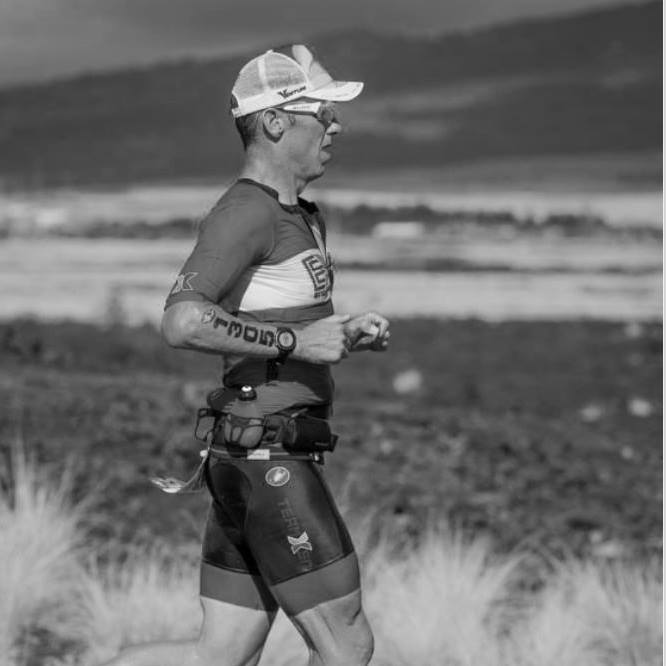
Grand Raid des Pyrénées photo A.Begay
Creative Commons License photo credit: akunamatata

In a previous post we outlined our recommended means of building run fitness across a triathlon season by emphasizing the importance of building fast over far. If you read that article, then you learned about the hidden cost of volume, velocity vs volume, and the importance of benchmarking. Or perhaps you have reviewed our online training manual (free, here) and seen how we build a season.

And if you are a follower of our blog, then you know we think running a marathon in the off season is one of the biggest multisport sins an aspiring triathlete can make.

This raises the inevitable question: At what point in your year can you actually go long with your running to get better?

Here are some macro level pointers on how we suggest you proceed.


1 — Separate Running from Your Triathlon Training

You can’t just add more running your triathlon training program and expect to see results. You’ll see change for sure, but most of those improvements will be short-term. Other deltas will most likely include sub-par cycling performance and increase levels of mental and physical fatigue.

Start the cycle off right by taking a training break before becoming a runner. Starting a major run block just two weeks after your last race is a recipe for trouble.

At the same time, we encourage you to leave the “Fast then Far” mentality behind for this run focused block. As you’ll only be running, you’ll have plenty of time to rack up the miles and hours. More time spent training means the intensity must come down if you are to absorb it all.

Instead of two hard runs (out of four) in a week, this might mean cutting back to just one short interval run at threshold pace (5 x 3 minutes at Threshold with 2 minutes of rest after each, for example) with the remainder of your runs done in zones 1 and 2. Or perhaps you hold the intensity for the latter stages of your program; maybe you skip it entirely. Only you know what’s best.


2 — Define Yourself As A Runner

Part of the separation process listed above is about finding your own identity as a runner. The running game is different than triathlon in that the type of recovery required is significantly more intensive. The fueling needs are different, both within your workouts and across your day. Take the time to find this niche, as what you think you’ll need (when you start) will ultimately be different than what you’ll actually need (as you evolve).

You should also consider a review of your running technique. After all, if you are going to spend 100% of your exercise time doing one thing, you want to be good at that thing! There are tons of resources available online, from clinics to coaches, from DVDs to mp3s. Explore what resonates for you and spend some quality early time building your new skill sets.


3 — Conservatively & Consistently Conquer Volume

A mouthful for sure, but if you can remember the mantra you’ll be much better off. As a “new” runner the temptation will be there to cook yourself. Road races outnumber triathlons as much as 8:1 in most areas, meaning you’ll have weekday and weekend options to put the hammer down. Resist.

Start your new program with the same number of runs you’ve been doing as a triathlete. Add time to each run then condense that time into a new daily run; then repeat. Good running form is like wine, the longer you give it, the more robust it will be. Once you have been at the new running game for 6-8 weeks, you can begin thinking about doing some longer runs. By longer I mean anything over 90 minutes.

Try not to go crazy. The average triathlete, regardless of goal race distance, spends anywhere from 8 to 14 hours a week training across all three disciplines. By comparison, a high volume running week doesn’t take a lot of time, and it’s tempting to add more to the mix. For someone who averages 8:30/miles, putting in a 50 mile week is only a seven hour undertaking.


4 — Pick A Goal, Not A Race

It’s easy to drop a marathon on calendar in five months, it’s another thing to train for it. All of a sudden you’ll have a goal time and a goal pace. Next thing you know, you are measuring every run against those metrics. Before too long you are burned out and the run project’s a bust.

Instead of just racing, choose non-performance related goals that are consistent with your new approach to running. Maybe aim for a 30-days/30-runs challenge; or maybe try to run a set number of miles for a set number of days (8 miles a day for 8 days). Perhaps there’s a local hill you want to conquer or maybe you want to explore every trail option in the nearby state park. Whatever your goal, make it both challenging and fun.

There’s nothing to stop you from jumping into a race on short notice should things work out, but don’t let it be the carrot/stick that gets you going.

Here’s a quick snapshot of how an Ironman athlete might proceed with a four month run-focused block of training. In this case the athlete builds from four weekly runs with a max duration of 60 minutes for the longest run up to six weekly runs topping out at 2 hours and 20 minutes. It’s assumed that the individual runs will increase in duration each week, save for every fourth week where the volume cuts back a bit to allow for some recovery.

Per the guidance above, this runner doesn’t get really serious about long distance work until after 8 weeks, and any major volume goals (or racing) wouldn’t really happen until that last block.

Week # of Runs Longest Run Goal(s)
1 4 60 mins Easy start.
2 4 65 mins Add time, but conservatively.
3 5 70 mins Add one more run, cut times off all runs to compensate.
4 5 75 mins Recover, consolidate.
5 6 80 mins Bump to six runs.
6 5 90 mins Cut back but add volume.
7 6 90 mins Keep volume & add 6th run back in.
8 5 90 mins Recover, consolidate.
9 6 105 mins Move to longer runs.
10 6 120 mins Continue longer runs.
11 6 140 mins Longest run reached.
12 5 90 mins Recover, consolidate.
13 6 120 mins Long runs with hills.
14 6 140 mins Biggest week #1.
15 6 120 mins Long runs with hills.
16 5 140 mins Biggest week #2.

Popularity: 7% [?]

Team EN vs Boston Marathon 2010

Posted by admin On April - 21 - 2010

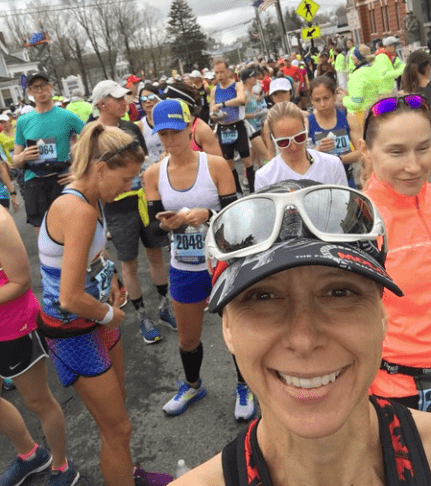
Boston Marathon in Wellesley CenterWe had several “official” Team EN members take on the Boston Marathon this year. This is despite our annual push to get folks not to run a marathon in your training — for some the siren call of Boston is too strong to resist!

The runners had a great day, with perfect temps and perhaps just a bit too much wind — but nothing jaw-droppingly hard. That was reserved for the hills of Newton and the rolling terrain of Beacon Street beyond!

Thanks to all of you: William, Michelle, Chris, Bryan, Matt, Amy, Todd, Bill, Keith & Linda and Mark who made it out to our Team Lunch on Sunday…I hope the food proved to be good fuel!

Here are the numbers for the folks I saw, in alphabetical order. Great job by all on a pretty good / yet tough day. Boston is NOT an easy marathon course and you all did very, very well!!!!

  • Matt Ancona: 2:49:40
  • Todd DesFossess: 3:29:05
  • William Jenks: 3:16:40
  • Bill McKinney: 4:02:16
  • Greg Rhodes: 3:32:48
  • Mark Roberts: 3:54:37

Popularity: 11% [?]

Running a Faster Ironman Marathon, Part II: Running Faster

Posted by admin On March - 22 - 2010

Let’s begin by breaking the topic down into two major components: Running Potential and Running Success.

  • Running Potential: “What CAN I run on race day, given current fitness, training, etc?” The best predictor of Running Potential on race day is your VDot score.
  • Running Success: “Given my running potential, what WILL I run on race day.” The best predictor of Running Success on race day is race execution skills.

So you show up to T2 with a VDot score and race execution skills. Which is most important?

Race Execution Skills!!!!!!!

All the running potential in the world can’t help you if you don’t know how to execute a 26.2 mile run at the end of a 140 mile day. And the Ironman run course is littered with the shattered bodies and broken dreams of very fit boys and girls…who don’t know how to race. I’ll cover race execution in Part IV of this series, but I just wanted to begin this discussion about how to run faster by driving home the central point of everything I do as the coach of a Team of Ironman athletes: execution, execution, execution.

Jack Daniels Running Formula and VDot
Back in the day, before heart rate monitors, Dr. Maffetone, and 220-age quackery, runners trained by pace. Jack Daniels created a training with pace system, described in his book, the Jack Daniels Running Formula. I HIGHLY recommend you purchase and read his book. The method is simple:

  1. Perform a test or race on a known distance, flat course. 5k, 10k, half marathon, etc. This test is the functional expression of my fitness. “However fit I think I might be, whatever my body is doing/can do inside, the functional expression of that fitness is my current ability to run a 5k in 21:30.” This is a hard, objective, non-fuzzy data point.
  2. Use his tables (or an online calculator) to extract a VDot, based on your test above. We also extract a Lactate Threshold Heart Rate number from this test and calculate heart rate training zones.
  3. From this VDot, extract training paces. These paces are integrated with heart rate training zones. The net is that our athletes train all year with pace as the primary intensity measurement, heart rate as the secondary, and the combination of the two gives them very powerful insight into their bodies.
  4. Create a training plan that applies these training paces to achieve your fitness goals.
  5. Retest to reassess/reset VDot and establish new training paces, based on your improving fitness.
  6. Apply these new paces to your training plan.

With the ever more affordable availability of running GPS units, what’s old is now new again. For nearly three years we have applied the Jack Daniels principles to our Team of over 400 long course triathletes. That’s a LOT of data and this is what we have learned:

Lesson #1: Ironman Running Potential = E-Pace
Timmy trains and trains and trains. About 3-4wks out from Ironman Wisconsin he tests and his final VDot is 52, yielding an E-pace of 8:16/mile. We have three years of data that says his potential Ironman marathon time is 3:36. Timmy then executes his race, based on this demonstrated fitness, his VDot, not hopes, dreams, and “guts.” What you do on race day is a function of what you actually CAN do, not hope/think/wish you could do. Given his running potential, Timmy’s success on race day is a function of:

  1. Race execution skills, by far.
  2. Running durability, created through running frequency, consistency, and volume, but…

Lesson #2: Running volume is NOT the best predictor
If you want to run fast on race day you need to make yourself a faster runner by…running fast. This is largely counter to the culture of the sport, which preaches becoming a better or stronger (whatever that means) runner by focusing on volume performed at Heart Rate Zone X. There are several fundamental flaws with this volume focus:

  1. As you’ve heard us say so many times, if volume is your only solution to a problem (as it is for traditional Ironman training), what happens when you run out of the ability to do more volume? In our experience, the run volume of 90% of Ironman athletes is about 30-35 miles per week. Maybe the occasional 40+ mile week, 50+ are VERY rare. This is just where the volume of most AG’ers sorts itself out, given the need to integrate this with running with swimming and cycling. In short, there are significant get-faster-thru-volume limitations within the context of AG’er Ironman training, ie, you can only do so much volume before your body starts to break down or that volume seriously impacts other workouts.
  2. Does not yield very useful race day guidance. After training with volume and heart rate, I still enter the run course on race day without very clear pacing guidance. I’ve run x miles per week…but what does that mean in terms of what I should actually DO on race day? I’ve been training at heart rate X…but what does that mean within the context of the Ironman run, where my heart rate can be significantly different than in training?  Our solution is to combine training and racing into one coherent system: by training with pace I finish the preparation phase of my training with a test yielding objective data — “this is what I can DO with my current fitness.” This data is then plugged into a system that’s been proven across hundreds of athletes.

Lesson #3: Build Fast, then Far
As you know, we preach that if you want to be faster you need to actually MAKE yourself faster. The most effective and time efficient manner to go faster is to spend time…going fast. However, as an Ironman athlete, we also need to build your ability to go Far. Our solution is separate the need to make you faster from the requirement to make you “farther,” by making you faster in our OutSeason, months and months away from your higher volume training. We train all of our athletes to be faster 5k runners in the OutSeason. Yep, I said it. Our Ironman athletes are training like 5k runners for 5mo per year. These athletes then apply this significantly increased running speed to PR’s at the half and full Ironman distance after they build Far on top of this Fast. Please review the testimonials of our athletes.

Lesson #4: Intense Running isn’t as Scary as You Think
Traditional Ironman training says that you’ll instantly implode on your first tempo run if you haven’t first earned the right to run faster by having punched the high volume clock…a lot. Our experience says otherwise:

  1. We work within a system (Jack Daniels) that has been proven through the results of literally millions of runners. In short, you always run at a pace that’s appropriate for you, as determined by an actually run test or race. In other words, what you do is function of what you have demonstrated you CAN do. Not a guess, not a SWAG, not hope…but an actual test.
  2. It doesn’t take a ton of get-faster training to make you faster. For perspective, as little as 2-4 miles/wk, total, at Tempo pace, can significantly boost your running speed.
  3. We’ve learned to how to integrate this get-faster run training within a triathlon schedule. Most notably:
  • Our “FAST then FAR” jazz above. This is huge.
  • We have figured out and added a “Half Marathon Pace” to the Daniel’s pacing tables. This has been a very useful training pace for us.
  • 5k’s as running tests, as they are most repeatable and easy to integrate into an Ironman training schedule.

Rich Strauss
Endurance Nation

Need a half or full Ironman training plan? Ours are in their seventh generation of improvement, used by thousands of long course finishers, age group winners and Kona qualifiers! Use discount code EN10 to save 10%! Interested in learning more about training with pace? Please download our Training with Pace ebook.

Popularity: 16% [?]

Running a Faster Ironman Marathon, Part I: Introduction

Posted by admin On March - 16 - 2010

Coach Rich at IMCDA'08

The Ironman run course is where PR hopes and dreams go to die a painful death. The course is littered with the bodies of very fit people who’ve done all the right training, or so they think, but who slow down dramatically on the run. In our opinion, traditional Ironman training has several weaknesses, and just gets several things completely wrong:

  • “If the only tool you have is a hammer, every problem looks like a nail.” In the Ironman world, that hammer is training and fitness. A poor race is the result of poor training and can only be fixed by…training more. In our experience, race execution is FAR more important than fitness. All the fitness in the world can’t help you if you don’t know to race.
  • The hammer above usually has “Volume” stamped on the side of it, the solution to all fitness shortcomings — just throw volume at it! The scenario is this: the Ironman athlete runs, and runs, and runs, counting miles, hours, and strategerizing “how long should my long run be?” Then, before the race, they basically throw a dart at a dartboard to guess their marathon goal time (see below).
  • Traditional Ironman thinking doesn’t offer a clear Ironman marathon goal time, based on current fitness, past PR’s, or actual training/racing data. Ask the tri world “I run a 3:45 open marathon…what should I be able to run in an Ironman?” and you’ll get a WIDE range of answers, all vague. This lack of precision, and advice that’s not based on actual data, leads Ironman athletes to often set unrealistic goals for their race. They pace the run incorrectly as a result and implode magnificently in the last 8-10 miles.

We’ve broken the Ironman run down into a three step system, which we’ll share with you in this series:

Step 1: Get Faster.
Within Endurance Nation we prefer, whenever possible, to train and race with power and pace. While a powermeter can be an expensive purchase, the price of running GPS devices continues to decline. The net is that MANY of our athletes train for and race Ironman with pace, creating a tremendous opportunity for us to analyze their data. In Part I we’ll share with you what we’ve learned from the training data of over 400 athletes.

Step 2: Run More Efficiently
You can train your body to run more smoothly and efficiently. However, it’s not as complicated and arcane as the rest of the tri world would have you think. In Part II we’ll share with you how you can run much more efficiently with only a 20-30 minute investment per week.

Step 3: Execute!
400 athletes training with pace = 400 athletes RACING with pace = a LOT of data on what actually works! In Part III we’ll share with a system that:

  1. Will predict your marathon time within 3-7 minutes, based on your current measured fitness, not shoulda, coulda woulda’s.
  2. Will tell you exactly what pace you should run for every mile of the race.

Creating, implementing, and refining this system has been a long process and we are eager to share the system, and it’s results with you:

  • IM athletes knocking on the door to Kona, a podium spot, or racing with a performance mindset: the simplicity, and data/results driven nature of it’s origins will appeal to you. It will offer you an opportunity to increase your fitness a few ticks and then apply this fitness to a proven execution system, finally pushing you over that bar you’ve been chasing for a long, long time. Ironman age group winners, podium finishers, Kona qualifiers and age group record holders have all followed this system. It WORKS.
  • IM athletes finishing slower than about 11:30-45: in our experience, you just live in a world where you expect much shuffling, plodding, and even walking on the run. You’ve come to expect this as your lot in the IM life. However, we’ve been able to create 1-3 HOUR PR’s with athletes just like you by giving them the fitness, efficiency, and race execution tools that help them to…not slow down. We call them our Ten Minute Per Mile Rockstars and their journey has been our most rewarding as coaches.

Stay tuned for Part I, coming soon!

Rich Strauss
Endurance Nation Head Coach and Co-Founder

Need a half or full Ironman training plan? Ours are in their seventh generation of improvement, used by thousands of long course finishers, age group winners and Kona qualifiers! Use discount code EN10 to save 10%!

Popularity: 13% [?]

Evolution of Running within Endurance Nation, Part II

Posted by admin On April - 22 - 2009

Part 2 of another Endurance Nation case study in community-driven continuous improvement. You can read Part 1 here.

Out Season, 2008
Rich and Patrick lock themselves down into bi-coastal coffee shops and, their brains connected through tools like Skype, Google Chat, and Google Docs, they hammer out the next version of Out-Season Plans, with these refinements:

  • Zero swimming. Yeah, it’s whack but we have good reasons, it works.
  • Bike = it’s still all about FTP. We tweak the intervals, move the workouts around on the weekly calendar, turn this up, this down, but in the end nothing too revolutionary.
  • Run = it’s ALL about the VDot = forget the half marathon stuff and focus on 5k fitness. Yep, we are going to tell Ironman athletes to forget running endurance, half marathon OS focus, and instead train for a 5k PR. Fortunately, after being in the Haus for over a year, many had faith in us and followed us. Many others went along for the ride, swallowing big glasses of EN KoolAid being served by the upperclassmen.
  • We scheduled a January Run Challenge to give those who wanted it an early season running frequency and volume pop, just for fun.

Read the rest of this entry »

Popularity: 12% [?]