Archive for the ‘four keys’ Category

How To Execute the Final Aid Stations in an Ironman

Posted by admin On August - 30 - 2011

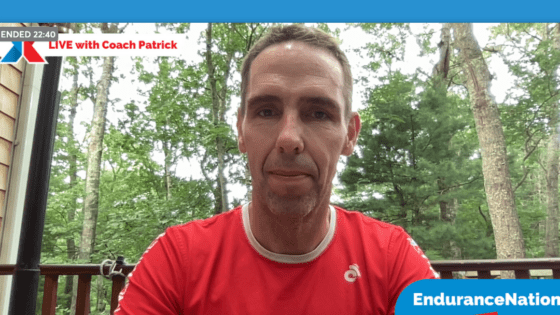
The video below is of our good friend and seasoned Ironman veteran Vinu Malik of Fuelbelt. In a hunt for a Kona slot at Ironman Louisville, he knew that most of the folks in front of him were running way slower. Here he is giving it full gas at the Mile 22 aid station, getting it done right. Enjoy!

Popularity: 9% [?]

Endurance Nation’s Triathlon Fundamentals

Posted by admin On August - 25 - 2011
Förderzentrum PestalozziIt’s Time to Go Back to Tri School — You Ready???
Creative Commons License photo credit: mueritz 

We initially were going to title this post something like: “Everything I’ve Learned About Triathlon Has Come From Coaching Over 5,000 Athletes, Not From A Random Book”  But that wasn’t as catchy and we’re pretty sure no one would read it!The reality is, there’s what you learn from books and then there’s what you learn when you apply that book stuff to your own training (25 IM finishes, including Kona, between us) and the training of thousands of real-world, age grouper long course triathletes. There’s what you learn when you coach 15 people at a time…then there’s what you learn when you guide 500+ athletes per year to Ironman finishlines around the world. 

So put down that TriRag with all the sexy models, bling components, and the latest and greatest way to lose 20lbs while training to qualify for Kona in just 12 weeks. Do your best to quell the urge to pull out your wallet and spend your way to triathlon success.

Just because you have a full-time job doesn’t mean that you need to spend 10% of your annual salary in order to be competitive. In fact, as you’ll see below, there are plenty of things the average person can do to improve their fitness, strength and ability to race that don’t involve tons of money or time.

1. Work Is Speed Entering the Body (aka Go Fast to Get Fast)

As a triathlete, you move your body down the road, either by running or cycling. Your body has mass and by moving it at a certain speed/velocity you are performing work.

You and I weigh the same and we run the same three mile course. I average 8:00 miles and you average 9:00 miles. I’ve moved the mass of my body (the same as yours!) over the same distance in less time. I’ve done more work than you. Lets call it 300 units to your 200 units.

All things being equal (conditions, our fatigue level, etc) the reason why I can do 300 to your 200 units is because I’ve forced my body to adapt itself to be able to support a workload of 300 units. Your body will only adapt itself to the workload that you expose it to, nothing more. Doing more work forces your body to adapt. So how do you develop the ability to go from running 3 miles at 9:00/mile pace to running at 8:00/mile pace like me? You need to do more work.

The most time-efficient way to do this is to spend more time running at / under / near 8:00/mile pace: half-mile repeats, mile repeats, pick ups, etc. Hard work plus recovery will make you stronger, eventually enabling you to reach your 8:00/mile pace goal.

A well thought out and proven training program will prescribe work that’s appropriate for your level of fitness, turning the dial up and up, and then backing off a bit just when you need it.

Most importantly, work is measurable. You can measure watts on a bike, or pace on a run. You can quantify the % of level effort you are able to sustain, and then improve upon it on a regular basis. Leave the thoughts of just adding volume or training for 25+ hours a week for your single friends or those TriRag profiled athletes. As an age grouper with a job, a family and other responsibilities, doing more “work” in your training is the most direct way to see improvement.

To put it another way, if your primary definition of “more work” is “more volume,” turning up the dial so that a 12hr week becomes 14hrs becomes 18hrs becomes 20hrs…becomes what? Where does it stop? When you’re divorced, unemployed and homeless?!

We’ve learned, through experience, that our primary tool to impart greater and greater training stress to our athletes is to manage the intensity of the workouts first, volume a very, very distant second.

Weekly training volume for the average grouper is largely fixed by life, family, job, life and life. However, the intensity at which you do workouts within that fixed volume is infinitely flexible. This is why intensity, not volume, is the primary dial our age group athletes use to adjust training stress within each training week.

2. Fast Before Far (aka Volume is Easily Added)

Since 2007 we have been teaching our “fast before far” approach, where we use the winter months to improve our athlete’s speed and strength at threshold. We can afford to do this higher intensity training because in the winter there are no volume demands on our training schedule and there are plenty of opportunities to recover from the hard training.

The net is that our Endurance Nation OutSeason plan has between six and eight hours of weekly training — total! — across four or five months of the year.

So in the winter, roughly October/November through February/March, we drop the volume dramatically, turn up the intensity…dramatically…making our athletes much, much faster. The average Endurance Nation athlete improves his/her Ironman or Half Ironman race pace on the bike by 1.5 to 2 miles per hour, and over a minute per mile faster on the run…often making them 30 minutes faster than last years version of themselves, long before they have even started to ride longer than 90 minutes.

Once the weather turns and we can add volume without burning the athlete out on a trainer, we drop the intensity and add more miles. Spring is our favorite time of the year, when we unleash the Team on their training partners and hear the stories about dropping the pack, putting the hurt on, and leaving lots of folks scratching their heads.

Triathlon training culture and old-school coaching books continue to sell the need for many long, aerobic miles before speed can be properly added. The result is snow-bound, age group athletes doing 4-5hr trainer rides, and 12-15hr training weeks in February, months and months before their goal race. Not only is it an inefficient way to train, the mental cost to the athlete is off the charts.  Since we all live in a world where 5-7hrs per week in the winter — when it’s cold, dark, and months and months from goal race — is simply more appropriate, our training approach shifts to low volume/high intensity because it’s simply the best, most time efficient way for real world age groupers to train.

3. Volume is Race-Specific

Just because volume isn’t the means by which we build your fitness over the season doesn’t make it any less important inside Endurance Nation. In fact, we provide multiple options for our Team to put in some epic training: our annual Tour of California Cycling Camp, various Triathlon Rally events on IM courses, member-run camps across the country, and even members-only plans for big bike and big triathlon-specific training weeks. 

Each of these different opportunities shares a single common thread: they are all focused opportunities ranging from three to seven days in duration. They are structured to have an impact on your actual race performance, with the timing of the Texas Rally, for example, set to approximately 4 weeks prior to the event.

We’ve found that these relatively short volume pops are a much more time-efficient way to dramatically boost endurance — assuming, of course, that you have the time to do them. Rather than requiring them to nickle and dime their families for multiple 5-6hr training days every week for months and months, we work with our athletes to put a Big Bike or Big Tri Week/Weekend “X” days out from their race.

With your Fast already built, it’s easy to add Far to the equation because volume isn’t actually that hard. If you and I were planning on a 2.5-hour ride, but I rolled up and said let’s go 3.5-hours, it ain’t no big thing. You wouldn’t tell me that you have to train more before you could ride another hour with me…you’d simply go get another energy bar. Done. 

It’s not the individual dose of volume that can be damaging, rather it’s the cumulative effect of repeat days, weeks and months of such training that can cause serious issues such as injury and over-training.

For the average age-group triathlete, the weekly volume of training required to complete an Ironman or 70.3 is at or above the basic level of time they can sustain.

By leveraging intensity early in the year and then dialing the focus over to volume as race day approaches, Endurance Nation takes a season of massive training hours and boils it down to a four- to eight-week focused exercise.

Remember, the reason why the Endurance Nation athlete doesn’t do months and months of 5-6hrs long rides, 3hr long runs, 2hr brick runs, isn’t swimming 3x week in January for a race in September, or spending 2hrs/wk in the gym is because Rich and Patrick have learned better through their own training (aka School of Hard Knocks) and through coaching thousands of age groupers just like you. We have done the 3-hour tempo runs, the back-to-back to back 120 mile cycling days for weeks on end, the 25-hour training weeks until implosion.

We’ve learned what works and what doesn’t–through our own extensive training, racing, and coaching experience–so you don’t have to experiment and, frankly, make the same mistakes we did.

4. Race Day is about Execution not Fitness

Conversations in the triathlon space are dominated by discussions on how to train and what $$$$ aero widget to buy. How far/long/hard/often should I bang my head against the wall each week and which $150 bottle is going to save me 15 seconds on race day? 

We’ll say it again because it bears repeating: we’ve raced over 25 Ironmans between us. We’ve brought thousands across finishlines in the last decade. TeamEN has 20-45 athletes at every US Ironman. Either Rich or Patrick has been AT every one of those races to support the Team, for years. In short: we’ve made, managed, or observed more rolls of the Ironman racing dice than probably any two coaches on the planet.

Our Number One Observation is that race day is about execution, not fitness. Regardless of how they got there, how they trained, etc, 95% of Ironman athletes at the starting line are very, very fit.

What separates people at the finishline the most is how they drive that fitness vehicle on race day. The race course is littered with the bodies of very fit guys and gals…who just don’t know how to race.

Therefore, we view proper race execution as free speed and about half of our members-only resources are dedicated to teaching everyone on the team how to race with the collective experience of 1000’s of Ironman finishes — an extensive Ironman How-To, webinars in swim, bike, run and nutrition execution, power and run pacing calculators, threads to collect sneaky speed tips on bike set up, gearing, and much more. 

It’s important to remember that there are many different ways to get stronger and faster as a triathlete. Endurance Nation’s approach focuses exclusively on the age-group athlete who has real-world constraints and commitments, but the lessons we have learned above can help anyone looking to seek improvement. And who knows, your family might just enjoy being on the sidelines watching you execute the perfect race!

To learn more about Endurance Nation, our triathlon coaching and triathlon training plans, please visit us online at www.EnduranceNation.us.


Popularity: 14% [?]

The Ironman Run/Walk?

Posted by admin On July - 11 - 2011

“Should I walk the aid stations at my next Ironman run or just run through them?”

We’ve been recommending a run/walk strategy for our athletes and at our “Four Keys” pre-race talk for years. It works and these are our thoughts:

Run through the aid station to the last water, gel, coke, sportsdrink guy/gal, whatever your needs are for that aid station. Get it and walk for 30 steps:

  • Last means you’re not tempted to walk allllll the way through the whole aid station. They can be big. You’re now, hopefully, walking among people who are running = a reminder to start running vs keep walking like everyone else.
  • 30 steps is a hard, non-negotiable number that removes you from the decision to start running again. 30 steps takes about 15-18″. Maybe later in the race you start running after 30″ vs 30 steps. Whatever, pick a non-negotiable something that removes your will from the decision to start running again.

Walking for 15-30″ at the aid stations then becomes:

  • A tool for slowing you down early on the run. Stand a half mile to a mile out from T2. From the looks of it, about half the field thinks they can run a sub 3:15 marathon, as hundreds drill it at sub 7:30 pace…until they end up walking 10 miles at 17′ pace. Walking the aid stations slows you down, separates you from these people who are running too fast, and focuses you on your race, a 140 mile TT, not a race to the fastest mile 8 run split, where the wheels begin to fall off for many.
  • A reward for continuing to run between the aid stations. As the run develops:
    • At first you won’t need to walk the aid stations, at all. You don’t think about it until you’re in the aid station.
    • After about mile 8 or 10, you’ll start looking for the next aid station (ie, permission to walk and take a short break) about 7-8 minutes after you’ve left your last aid station.
    • Then you start looking for it at 6 minutes out.
    • Then 4 minutes out.
    • Then 2 minutes out.
    • Then 30 seconds out.
    • Giving yourself permission to walk the aid stations, beginning with Mile 1, becomes a reward for continuing to run between the aid stations. The mental conversation becomes “Body, STFU. Keep running, don’t slow down, and I will reward you for that effort over the next mile by letting you walk 30 steps at the next aid station. That’s the deal and we only have to play this game for another 6-8 miles. Suck it up.”

Walking then becomes a tactic, to keep you running and not slowing down between the aid stations, vs a failure.

Next time you go for a long run with friends, do this 1 mile on, 30″ off (walking, not standing) thing. See just how little space they actually gain on you, how quickly you can get back up to pace, and long you can maintain this total pace vs them slowing down. That slowing effect is much greater and much more likely on the IM marathon.

I have a Garmin 310 and I walk 30″ every mile on nearly all of my training runs. I have one display screen that gives me current pace, cummulative distance, time, blah, blah and another that gives me current pace, lap distance and average pace of the lap. I hit the lap button at the end of the mile and see myself walking for 30″ at about 17-18′ pace. When I start running, my avg pace for the lap is…17′. But it quickly spools down until by about .5-6 miles into the interval I’m back at the average pace I would be at anyway, had I not taken a 30″ break. Each time I do and see this, I gain confidence in what the numbers tell me. I’m also able to reset my focus on form and pace cues that I hold for 1 mile and then reset at the start of the next interval.

In summary, walking 30 steps or about 30 seconds at every aid station, beginning with Mile 1:

  • Breaks the run into 26 x 1 mile boxes, within which I focus on making the best decisions possible — what to eat, what to drink, pace up/down this hill, focus on my cadence, footstrike, running form and other easy to flake on cues.
  • Is a tool for slowing you down at a time of the race when nearly everyone is running too fast. Don’t try to beat a guy running 7:30′s by running 7:20′s. Do your thing, ignore him, run/walk your 8:40′s and catch him at mile 20 when he’s walking or under a bush. The IM run course is littered with the bodies of very fit people walking the IM marathon after having run much, much faster in the first 6-8 miles and refusing to walk. How’s that strategy working?
  • Becomes a reward for continuing to run between the aid stations.

We’ve had Ironman athletes of all flavors set huge run PR’s and Kona qualify using our strategy. It works!

Rich Strauss

Endurance Nation Triathlon Coaching
Create a FREE 5-Day Trial Membership

Popularity: 14% [?]

Fatigue, FTP, & Your Final Weeks

Posted by admin On July - 5 - 2011

Cervelo P2It sure looks fast…now how will you ride it?
Creative Commons License photo credit: Alex Kehr


There are two very important questions that you, as an Ironman athlete, have to be ready to answer about your bike fitness heading into the final eight weeks of your Ironman or Half Ironman training cycle. First you have to know what your Functional Threshold Power (link?) is, or at least the Heart Rate equivalent. Second, you have to be able to give a resounding “YES!” answer as to whether or not you have done all of your bike workouts, especially the longer sessions.

In other words, successful race prep is about knowing your limits (your power/HR numbers) and about having confidence in your strengths. If you fudge either of these factors on your way to Race Day, your overall performance will suffer and you won’t be able to race to your potential.

The closer you get to the Big Day, however, the harder these two questions become to answer. Cumulative fatigue mounts, and your ability to generate or even sustain threshold effort on the bike becomes severely compromised. This can lead you to question your fitness and overall preparedness, and perhaps even to make some rash decisions.

An Example Situation

I have this “friend” who is training for Ironman Lake Placid 2011. His name is Patrick, and he’s a coach with Endurance Nation. Really nice guy…and here’s his FTP dilemma. It’s a story repeated across athletes and seasons; maybe it’s even happened to you.

Back in February, his FTP tested out at 342 on the indoor trainer, putting his estimated outdoor watts pretty close to 360.

When he got outside on his road bike in April, he spent four weeks chasing that estimated outdoor FTP before he acknowledged that the single test he took must have been an outlier. He dials his FTP back down to 342.

At the end of May, Patrick busts out his Tri Bike and notices right away that he can’t generate the same high numbers in the aero position, so he dials the watts down to 330.

And now with just three weeks to go, with some epic long rides and lots of long runs on his legs, Patrick is having trouble even hitting 330…it’s more like 320.

Is Patrick in trouble? Has he been getting less and less fit all year long? Has his entire season been a waste since that one test in February? The answer is no, across the board, and here’s why Patrick remains confident heading into his biggest race of the season.

Volume vs Intensity Inside EN

Volume gets a bad rap inside Endurance Nation, at least on the surface. We prefer to use intensity to create training stress, as it’s a much more time-effective method. As such, our OutSeason training includes lots of intervals and, commensurately, lots of rest. This is why back in February, Patrick and many other EN athletes were posting life best numbers.

As the weather turns and we move outdoors, the nature of our regular rides changes significantly. While the intervals remain an important component, the overall volume of almost every session is lengthened. Instead of doing 90 minutes of interval work on the bike across four total hours of riding, EN athletes will do that same 90 minutes across six or even eight hours on the bike.

This ratio continues to decrease the closer you get to your big race, as the long rides for an Ironman can mean a week of cycling nine hours. And that doesn’t take into account if you have added a Big Bike Weekend or Week into your season, like Patrick did back in May when he put in over 600 miles in nine days.

FTP Down but Race Fitness Up

At the end of the day, how we train is a function of the principle of specificity. In the Winter months, with no long race on the calendar, we can do a great deal of high intensity training to improve the upper limits of our bike and run fitness. As we move into the season and approach our Half or Ironman event, the mileage increases to prepare us for the rigors of the day.

While Patrick’s FTP appears to be on a downward trend, the simple truth is that he has been manipulating Training Stress by adding more time at a lower, race specific intensity. This is in stark contrast to the Winter training with it’s 8-, 12-, and 20-minute interval repeats.

Here is a good example of how this situation plays out. On Wednesday, Patrick can’t hit his current FTP of 330 during the mid-week interval session, turning in intervals in the 90% to 92% range (instead of the preferred 95-100% range). On Saturday he ride 150 miles at 74.5% of his FTP, — significantly higher that he had estimated. So while the high-end fitness isn’t necessarily there, it’s easy to see how the Winter strength has transformed into race-specific endurance.

Zen and the Art of Training for the Final Eight Weeks

While our Triathlon Training Plans include interval sessions and at least one bike and run fitness test, your top priorities lie elsewhere. With the shift to Race Prep training in the last twelve weeks / three months of your plan, your focus should also move from a quantitative obsession with bike and run threshold numbers.

You top goal for the final eight weeks is to remain healthy — so recover well and get lots of sleep. You need to be consistent with your sessions — so manage your effort every day so you can hit the workouts as written for each consecutive day. In other words, no hero sessions that set you back for a few days…please!

Your mental focus is on riding and running as steadily as possible, and you should be constantly testing your race fit and gear for the bike.  Every long ride is a chance to see how your bike position feels, how your clothing choice works, whether or not your nutrition is effective, etc. Race Day is about Execution, Not Fitness — the bike and run courses don’t care what your FTP is…they only care how well you ride them.

Inside Endurance Nation, we put your fitness and execution to the test in the form of two Race Simulation workouts. These are a 112-mile bike (or 6 hours, whichever comes first) followed by a 6-mile run (or 1 hour, whichever comes first).  Most likely these workouts will be full of challenges. Not to worry as all these issues will ensure you are fit and ready to go come race day.

Determining Your FTP Pre-Race

Just because coming by an FTP isn’t easy, doesn’t mean you can avoid it. It’s one of the most important metrics you need heading into the race so you can dial in the appropriate race effort that will set up a solid run.

While your first option is to complete another functional threshold test, the odds of you putting out a test indicative of your current fitness levels is pretty slim. It could be good, or it could be the double whammy that hurts your ego (another low number!) and messes up your race calculations.

Your second option is to review the data for the last month and make an educated guess. By using something like Training Peaks WKO to review the power output for the last 30 days, you can accurately find where you have spent the majority of your time riding. You can ballpark your FTP by looking on the right side of the bell curve, as the bars start to drop down…the biggest incremental fall off in 10 watt increments is a good indicator of where your fitness moves from aerobic/sustainable to anaerobic/unsustainable.

Final Bike Thoughts

Your fitness will be what it will be on race day; it’s not how strong you are on race day but rather how you use that strength. Rest assured that as an Endurance Nation member or training plan athlete, you have done all the hard work required to get stronger.

Instead of stressing about the final few watts or pounds, put your focus and attention to nailing the intangibles. Between dialing in your bike fit (see Todd at TTBikeFit.com), good bike setup, smart gearing choices, and how to ride steady/smart, EN athletes get a lot of free speed and smart riding mojo on race day. If your worried that you won’t be as strong as you’d like, then take comfort in knowing that you’ll be more aero, better geared and much, much smarter.

Good luck!

Popularity: 16% [?]

Short Course Race Nutrition

Posted by admin On March - 7 - 2011

Since race day nutrition is such a big part of Ironman racing, and because Ironman racing generates so much noise in the triathlon space, it’s difficult to find good guidance on how to fuel yourself for a short course triathlon. It’s not uncommon to see new triathletes in their first short course races racking their bikes with 4 bottles of sports drink and 10 gels taped to the top tube — bringing an Ironman nutrition plan to a short course triathlon.

Before we give you our recommended nutrition plan for short course racing, we want to share with you a few key points regarding endurance nutrition in general.

You have about a 2hr gas tank
Your body burns primarily fat to fuel itself during endurance training and racing. However, this fat is “burned in the fire of carbohydrates,” that is, you’re body needs to burn carbs in order to burn this fat. Your body’s primary sources of carbs are:

  1. Glycogen, stored in the muscles and liver.
  2. Food, or sugars, eaten during exercise.

Very generally speaking, a well trained endurance athlete has about 1500-2000 calories of glycogen stored in their body and available as the fire in which to burn fat, our primary fuel during exercise. In our experience, this glycogen store is good for about 1:45-2.5hrs of exercise for a well-trained endurance athlete. Hold that thought…

Less is More

“Hey, Body, I want you swim very hard, bike very hard, then run very hard. Oh, and while you’re at it, I want you to also eat and process this fancy sports food I’m shoving down your neck.”

The key verb in that sentence above is process. Right now, sitting on the couch, your body can easily process that pizza on the coffee table because you’re not asking it to do anything other continue sitting on the couch. But the harder and harder you exercise, resources available for processing food become more and more scarce, as blood is shunted from the stomach to the limbs, hard at work doing the triathlon racing thing.

The lesson here is that the fewer calories you eat and ask your body to process during a race, the more resources your body has available to continue to swim, bike, and run very hard. When we combine the Two Hour Gas Tank with our “Less is More” guidance above, we find that the best nutrition strategy for short course racing is a minimalist, take-in-as-few-calories-as-I-can-get-away-with strategy.

Now that we’ve set the stage for you, here is our nutrition plan for short course triathlon racing:

Pre-Race
The conditions you are trying to create before your wave hits the water at 7:25am on Sunday are:

  • You are well-hydrated
  • If it’s going to be a hot race, you’ve pre-loaded your body a bit with sodium.
  • You’ve topped off your glycogen stores, ie, you have a full tank of gas (see 2hrs above!)
  • Your stomach and digestive tract is relatively empty — you are now in complete control of everything that goes into it.

Day Before the Race:

  • Lunch: your largest meal of the day. No need to go crazy or eat anything special (a sandwich or pasta is fine), but eat a bigger lunch so you can have a lighter dinner, giving your body time to do it’s thing (see clean digestive tract above). Lightly salt your food. Drink water all day or, if tomorrow’s race is going to be hot, drink a sportsdrink instead of water. Don’t go crazy, no need to drink gallons of Gatorade!
  • Dinner: light, high in carbs, easy to digest.

Race Morning:
While you sleep your body will burn about 800 calories, tapping into that gas tank. Also, it’s likely that your stomach will be doing flip flops as you deal with race day nerves. This will slow down your digestion. So we need to top off your gas tank, but give your body enough time to process your food so you can start the race with a relatively empty stomach and clean digestive tract.

HIGHLY recommend you do this by waking up at 2am and having a very easily digestible breakfast of 600-800 calories. A liquid fruit smoothie is a good example. Then simply go back to sleep and wake up at your normal time. That is a plan that thousands of our athletes have followed since at least 2002. Wake up, eat, go back to sleep, it WORKS!!

From Wake Up #2 to Race Start
You’ve got a full tank of gas and you filled it up early enough so that everything should be out of your stomach by that 7:25am wave start. We suggest you eat VERY lightly. Maybe a sports bar while you drive to the race, drink a bottle of sportsdrink while setting up your transition, maybe pop a gel and slug some water about 30 minutes before your wave. That’s all you need, if that…less is more.

Sprint Nutrition:
Armed with your Two Hour Gas Tank, you don’t really need to take in any calories for a sprint. You’ve got enough fuel to last through the entire race and, more importantly, the fewer calories you take in, the harder you can race. But if you feel you may want to some calories with you, just in case:

  • On your bike: a bottle of sports drink, about 150 calories for the bottle, BUT you’ll be lucky to drink maybe half of it during the race…you’re riding that hard.
  • On the run: have a gel tucked into the leg of your shorts. Maybe pop the gel coming out of T2, grabbing a cup of water, and sip it for the first half mile as a tool to help you rein in the horses during the first half mile (see our short course pacing article here). Or grab a cup of sportsdrink at the first aid station. The simple fact is that with a 3k run, by the time that gel has a chance to do anything for you…you’re likely a mile or less from the finish anyway.

Bottomline is you just don’t “need” to take in any calories, at all, during a sprint and the fewer you take in the harder you can race…or you can fuel yourself with “maybe” 100-200 calories across the whole event, just in case.

Olympic Nutrition
Basically the same drill as a sprint, but you might drink the entire bottle of sportsdrink (~150cals) on the bike, and “maybe” take in another 100 calories on the run. The bottomline, again, is the less you eat, the less additional stuff you give your body to do = you can go harder with reduced risk of nutrition issues — cramping, side stitches, etc.

Interested in learning more about short course triathlon training and racing?

Take our FREE Short Course Training and Racing Virtual Seminar!
You’ll receive:

  • All lessons delivered straight to your email inbox.
  • Each lesson contains bonus material — ebooks, podcasts, and more — only available to seminar subscribers.
  • A FREE Four Keys of Triathlon Execution DVD, $37 value!
  • 10% discount on any training plan!
  • An invitation to join TeamEN as space becomes available throughout the season.

Popularity: 19% [?]