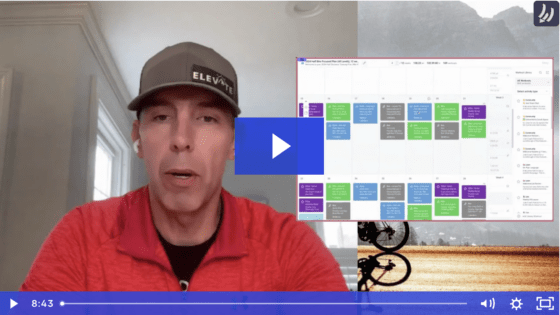
You’ve trained for six, nine or more months for this day. The chaos of the swim is gone, you’ve gotten your cycling legs back and now it’s time to get to work, to get down to racing the Ironman bike. STOP!! In our experience, if you’re going to booger months and months of training and ruin your race, you’re going to do it on the bike leg. Below are our tips for riding the optimum Ironman bike leg…plust be sure to read to the end for a bonus link to download our... more
Sudden Cardiac Death and the Endurance Athlete
With the recent passing of our friend Chris Gleason, many here at Endurance Nation have been wondering whether we should be doing more to ensure that our participation in our beloved hobby is a safe, smart idea. To that end, a few of the MD’s in the haus have offered up a summary of the risks and recommendations specifically for endurance athletes. Risks According to a literature review, the heart responds in a variety of ways to exercise. 1. Short Term Response a. “Exercise induced cardiac fatigue” which is a decrease in pumping and resting functions of the heart associated with ultra-endurance events i. Decrease in pumping function is variable and seems to be associated with duration of event and training status. ii. Not all studies report a decrease in pumping function. iii. Decreased resting function is more consistent and repeatable. iv. Exercise induced cardiac fatigue seems to be more prevalent in the right ventricle (lower chamber) and may lead to remolding (changes within... more
In Part I of this series we introduced you to the concept of using “Return on Investment” to make decisions on how you invest your limited resources of time, headspace, Spousal Approval Units, and money towards triathlon training. These constraints are simply part of being an Age Group triathlete. To help you navigate your own particular circumstances effectively, we recommend you continually ask yourself these three questions: What returns on race day will I see for this investment? Is that... more
With the recent passing of our friend Chris Gleason, many here at Endurance Nation have been wondering whether we should be doing more to ensure that our participation in our beloved hobby is a safe, smart idea. To that end, a few of the MD’s in the haus have offered up a summary of the risks and recommendations specifically for endurance athletes. Risks According to a literature review, the heart responds in a variety of ways to exercise. 1. Short Term Response a. “Exercise induced cardiac... more
By Patrick McCrann This time of year there are lots of great things to reading about swimming. But that doesn’t mean you need to do everything you read, all at once, and starting today! Swimming is a skill-based activity, with more than 80% of your “effort” being directed into proper form and positioning. This isn’t something you just start doing; it takes time and the proper attention. Here’s my age-grouper approach to working on my swimming across the context of a season of triathlon. Step... more
photo credit: Sonic Fitness 6:59am — music blasting, kayakers herding swimmers, and nearly 2500 Ironman athletes treading water or standing on the beach of the Ironman swim start, waiting pensively to start a very, very big and long day. 7:00am — BOOM! And so begins perhaps the most unique spectacle in all of endurance sports — the Ironman swim start. Nearly 2500 bodies and 5000 arms and legs churning the water to start a 140.6 mile day. Below are our tips for surviving, and excelling... more